


String Mops vs. Flat Mops: Which Is Better for Commercial Cleaning?
Choosing the right mop system can impact cleaning efficiency, hygiene, labor time, and long-term cost. This guide compares traditional string mops and modern flat mop systems so you can match the right tool to the task.
Quick answer: Flat mops are usually best for daily maintenance on smooth floors (faster, more hygienic, less water). String mops are best for large spills and heavier-duty cleaning where maximum absorbency is needed.
Definitions: String Mops vs. Flat Mops
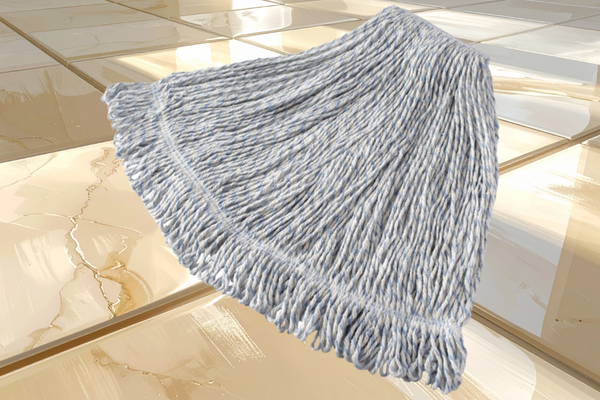
What Is a String Mop?
A string mop features strands (cotton, blends, rayon, or microfiber) and is typically used with a bucket and wringer. It’s highly absorbent and commonly used for spill response and heavier-duty cleaning.
Best uses:
- Large liquid spills
- Heavy soil buildup
- Rough or uneven flooring
- Restorative / deep cleaning tasks

What Is a Flat Mop?
A flat mop uses a rectangular pad (often microfiber) attached to a flat frame. Pads are removable and washable. Many systems use pre-soaked pads or spray-and-go methods for faster maintenance cleaning.
Best uses:
- Daily maintenance cleaning
- Smooth sealed floors
- High-traffic areas
- Facilities prioritizing hygiene
Comparison Table: Cleaning Performance
| Feature | String Mop | Flat Mop |
|---|---|---|
| Absorbs large spills | Excellent (high absorbency) | Limited (not ideal for big spills) |
| Everyday soil removal | Good, but slower method | Excellent, efficient on routine soil |
| Crevices / uneven floors | Better reach into grooves | Best on smooth / sealed floors |
| Routine maintenance speed | Moderate | Fast (quick setup, easy pad changes) |
Comparison Table: Water Usage & Dry Time
| Factor | String Mop | Flat Mop |
|---|---|---|
| Water / solution usage | Higher | Lower |
| Dry time | Slower | Faster |
| Slip risk after cleaning | Higher if floors stay wet | Lower due to faster drying |
| Moisture-sensitive floors | Higher risk if overwet | Lower risk (controlled moisture) |
Comparison Table: Labor & Ease of Use
| Factor | String Mop | Flat Mop |
|---|---|---|
| Weight during use | Heavy when wet | Lightweight |
| Maneuverability | Moderate | Excellent (corners / under furniture) |
| Setup & cleanup | Bucket / wringer required | Fast; pad swap or spray-and-go |
| Operator fatigue | Higher | Lower |
Comparison Table: Hygiene & Cost Over Time
| Factor | String Mop | Flat Mop |
|---|---|---|
| Cross-contamination control | Harder (dirty water risk) | Better (easy change-outs; launderable pads) |
| Sanitizing / laundering | Often less frequent | Frequent, simple laundering |
| Upfront cost | Lower | Higher |
| Long-term operating cost | Can rise with replacements & chemical/water use | Often lower with reusable pads & controlled solution use |
Which Mop Should You Choose?
Choose a flat mop for daily maintenance on smooth floors where speed, hygiene, and low water use matter most.
- Daily cleaning programs
- Schools, offices, retail, healthcare, foodservice
- Fast drying floors and improved infection-control routines
Choose a string mop for spill response, high-absorbency needs, and heavier-duty cleaning tasks.
- Large spills and high-liquid areas
- Rough surfaces and heavy soil
- Deep cleaning and restorative tasks
Best practice: Many facilities use both—flat mops for routine cleaning and string mops for spills and deep cleaning.
Final Recommendation
For most modern commercial cleaning programs, flat mop systems are the best everyday option thanks to faster cleaning, better hygiene, and reduced labor strain. String mops remain valuable for large spills and heavier-duty situations where maximum absorbency is required.
Tip: Swap pads/heads frequently to help reduce cross-contamination and improve results.